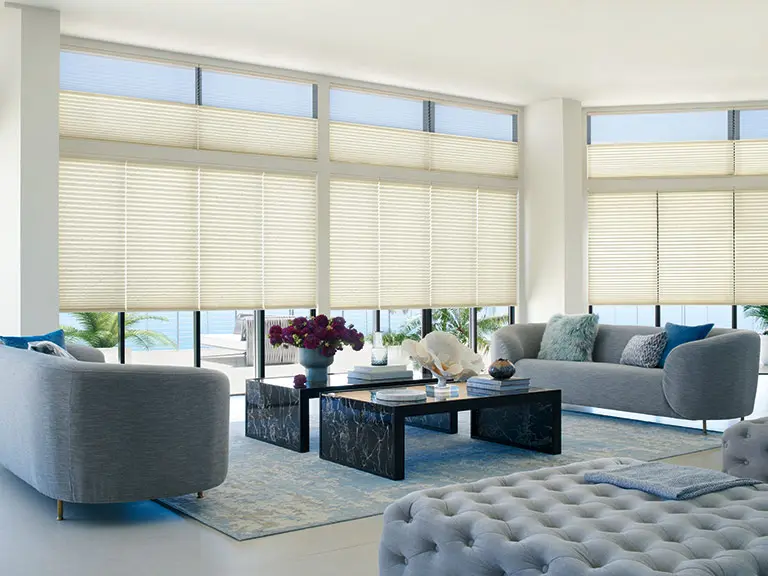
Window treatments are an important part of interior design, offering both visual appeal and function to any living space. From controlling natural light to providing privacy, the choices in window treatments are vast and varied.
4 Types of Window Treatments
- Curtains and Drapes: Curtains and drapes are perhaps the most traditional forms of window treatments. Made from fabric, they range from sheer to blackout thickness, providing varying degrees of light control and privacy. Curtains are lighter, often unlined and are ideal for creating a casual or airy look. Drape curtains, on the other hand, are heavier, typically lined and create a more formal appearance.
- Blinds: Blinds are made from hard materials such as wood, metal or plastic. They have slats that can be tilted to adjust light and visibility. Blinds can be vertical or horizontal and are a popular choice for their clean lines and ease of use. They are especially suitable for offices and homes with a modern design.
- Shades: Shades are fabric-based window coverings that pull up and down using a cord system or a spring mechanism. Popular types of shades include Roman, roller, and cellular shades, each offering different looks and levels of insulation. Shades are excellent for achieving a sleek look while providing energy efficiency.
- Shutters: Shutters are rigid window coverings that attach to the window frame. They can be made of wood or synthetic materials and are divided into panels that can be opened and closed. Shutters not only provide excellent privacy and light control but add to the resale value of a home due to their durability and timeless appeal.
Benefits of Window Treatments
Light Control
One of the main functions of window treatments is to manage the amount of natural light entering a space. This control can help reduce glare on screens, create ambiance and protect furniture and artwork from UV damage.
Privacy
Window treatments offer varying levels of privacy, from sheer curtains that allow visibility and light to enter from the outside to blackout drapes that ensure complete privacy and darkness.
Energy Efficiency
Certain window treatments, such as cellular shades and heavy drapes, provide an extra layer of insulation. This feature can help reduce energy costs by keeping a room warmer in winter and cooler in summer.
Appearance
Beyond their function, window treatments enhance the décor of a room. They can act as focal points or blend in with the overall interior design. The materials, colors and styles chosen can complement the furnishings and color palette of the space.
Choosing the Right Window Treatments
Before making a purchase, here are some things to consider:
- Consider the Room: Different rooms serve different purposes and might require different window treatments. For instance, blackout drapes might be ideal for bedrooms, while light, airy curtains could be better suited for a kitchen.
- Think About Maintenance: Fabrics that are machine washable are practical for high-use areas, whereas more delicate materials might be better for spaces used less frequently.
- Match Your Style: Consider the existing decor and choose treatments that complement or enhance your style.
When in doubt, an interior designer can provide tailored advice on both the aesthetic and functional aspects of window treatments suitable for your space.
Window treatments are more than just decorative elements. They are practical, functional parts of home design that enhance living spaces. With the right selection, you can transform the feel of a room, ensuring it meets both your style and functional needs.