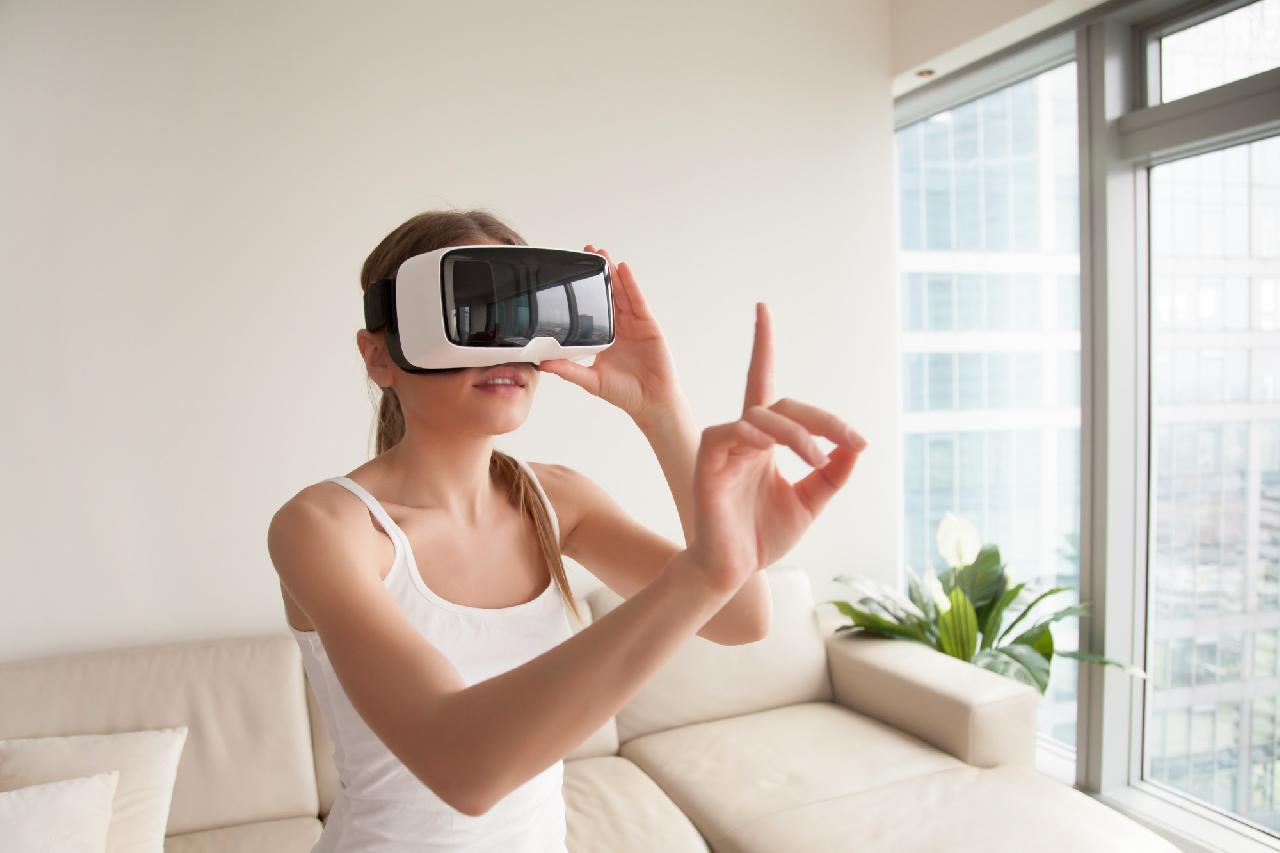
This blog is all about how virtual reality (VR) technology is revolutionizing the interior design industry. It covers the evolution of VR from basic 3D visualization to highly immersive, hyper-realistic simulations that allow clients and designers to interact with a virtual model of their spaces. Virtual reality (VR) technology, once the domain of futuristic fantasies and high-budget video games, has rapidly become a transformative tool in various industries. Among these, interior design has experienced one of the most profound shifts due to VR’s integration. This blog post delves into how virtual reality is revolutionizing the interior design industry, changing the way designers work, clients make decisions, and educational institutions teach future designers.
The Evolution of Virtual Reality in Interior Design
The journey of VR in interior design began as a novel way to visualize spaces. Initially, it offered a basic, somewhat clunky, 3D experience that was impressive but not quite immersive. Fast forward to today, and VR technology provides hyper-realistic simulations. Users can virtually walk through spaces, interact with elements, and experience textures and lighting effects that closely mimic real life. This evolution has not only captivated the imagination of designers and clients but also set new standards in presentation and decision-making processes.
Enhancing Client Communication and Satisfaction
One of the most significant impacts of VR in interior design is its ability to bridge the gap between designers’ visions and clients’ expectations. Traditionally, clients had to rely on 2D drawings, mood boards, and perhaps 3D models on a screen to visualize the proposed design. While effective, these methods often fell short of providing a complete understanding, leading to miscommunications and unmet expectations.
With VR, clients can don a headset and step into the proposed space, experiencing the design in a fully immersive environment. This not only excites and engages them but also allows for real-time feedback and modifications. Clients can experiment with different materials, colors, and layouts on the spot, drastically reducing the time and cost associated with design revisions.
Streamlining the Design Process
VR technology has streamlined the design process from concept to completion. Designers can now create and iterate designs in a virtual environment, significantly reducing the need for physical samples and mock-ups. This not only saves on material costs and waste but also speeds up the decision-making process, as changes can be made instantly and viewed in real-time.
Furthermore, VR aids in spatial planning and ergonomics, allowing designers to optimize the functionality and comfort of a space before any physical work begins. This precision planning helps in avoiding costly mistakes and ensures that the final outcome aligns perfectly with the envisioned design.
Expanding Creativity and Exploration
Virtual reality pushes the boundaries of creativity in interior design. Designers are no longer limited by the physical constraints of materials and space. In a virtual world, they can experiment with unconventional layouts, innovative materials, and bold color schemes without the risk of costly errors. This freedom encourages a more creative exploration of spaces, resulting in unique and personalized designs that truly reflect the client’s personality and needs.
Transforming Education and Skill Development
The integration of VR technology has also revolutionized the education of future interior designers. Traditional teaching methods are being supplemented or replaced by immersive VR experiences, providing students with a hands-on learning environment that is both engaging and effective. Through VR, students can work on real-world projects, explore a wide range of design styles, and develop a deeper understanding of spatial awareness and material properties. This practical experience prepares them for the challenges of the professional world and equips them with the skills needed to excel in a rapidly evolving industry.
The Future of Virtual Reality in Interior Design
As VR technology continues to advance, its influence on the interior design industry is expected to grow even further. Future developments could include even more realistic simulations, incorporating elements like sound and scent to create fully sensory environments. Additionally, the integration of artificial intelligence (AI) with VR could lead to smart design assistants, capable of making suggestions and optimizations, further enhancing the design process.
Moreover, as VR becomes more accessible and affordable, virtual design consultations and tours will likely become the norm, allowing designers to reach a global client base without the need for physical travel. This democratization of design services could open up new markets and opportunities for designers worldwide.
Conclusion
Virtual reality has truly transformed the interior design industry, making the way we create, visualize, and experience spaces more exciting and realistic than ever. By enhancing how we communicate designs, streamlining the creative process, and broadening the possibilities for innovation, VR technology has become a game-changer. It’s not just about design; it’s also revolutionizing how we teach and learn about interior design. Looking ahead, virtual reality is set to make the design world even more immersive, efficient, and accessible. Dive into this innovative field with the AAFT School of Interior Design, where our comprehensive programs and strong placement opportunities will equip you for a thriving career.
The Interior Design course equips students with the skills to create functional and aesthetically pleasing spaces, blending creativity with practical design principles.
FAQ
Q1: What is virtual reality in interior design? A1: Virtual reality in interior design refers to the use of VR technology to create immersive, 3D simulations of interior spaces. This allows both designers and clients to virtually walk through and interact with the space, facilitating better understanding, communication, and decision-making.
Q2: How does VR enhance the communication between interior designers and clients? A2: VR enhances communication by allowing clients to experience the proposed designs in a fully immersive environment. This direct, immersive experience helps clients understand the vision of the designer more clearly, provide instant feedback, and make informed decisions, reducing misunderstandings and ensuring satisfaction.
Q3: In what ways does VR streamline the interior design process? A3: VR streamlines the interior design process by enabling designers to create, modify, and visualize spaces in a virtual environment. This reduces the need for physical samples, speeds up the iteration process, and helps in accurate spatial planning and ergonomics, ultimately saving time and resources.
Q4: Can virtual reality in interior design help expand creativity? A4: Yes, VR can significantly expand creativity in interior design. It offers designers the freedom to experiment with different designs, materials, and layouts without the constraints of physical reality. This encourages innovative and personalized designs that might not have been considered possible otherwise.
Q5: How is VR transforming interior design education and skill development? A5: VR is transforming interior design education by providing students with immersive learning experiences. Through virtual simulations, students can gain hands-on experience, develop a better understanding of materials, space planning, and design concepts, which prepares them for real-world challenges in the interior design industry.
Q6: What does the future of VR in interior design look like? A6: The future of VR in interior design looks promising, with advancements expected in creating more realistic simulations incorporating sensory elements like sound and scent. The integration of AI could also offer smart design assistance, further streamlining the design process. As VR technology becomes more accessible, virtual design services could become more widespread, opening up global opportunities for designers.
Q7: How does VR help in making better design decisions? A7: VR helps in making better design decisions by providing a realistic representation of how the design will look and feel. Clients can explore different options, such as materials and layouts, in real-time, ensuring that the final decision reflects their preferences and requirements accurately.
Bottom of Form